


find your
Perfect
Product
What if the most effective way to erase years of texture issues wasn't found in a clinical procedure, but in a strategic routine you manage from your own home? For the 80% of people who experience acne scarring, the search for a solution often feels like a cycle of high-priced appointments and empty promises. Finding a professional resurfacing creme for acne scars is the first step toward reclaiming a complexion that feels as smooth as it looks. You've likely dealt with persistent uneven texture and dark spots that simply won't fade, leaving you frustrated and hesitant to try harsh treatments that might damage your skin.
We understand that high-stakes transformation requires more than just stripping the skin's surface; it requires a deep, biological renewal. In this guide, you'll master the science of dermal renewal to fade scars and smooth your skin texture with clinical precision. We'll break down the specific ingredients that deliver professional results, explain why safety standards like MoCRA matter for your routine, and show you how to build a regimen that transforms your skin without the fear of irritation. Your path to a uniform skin tone and professional-grade results starts here.
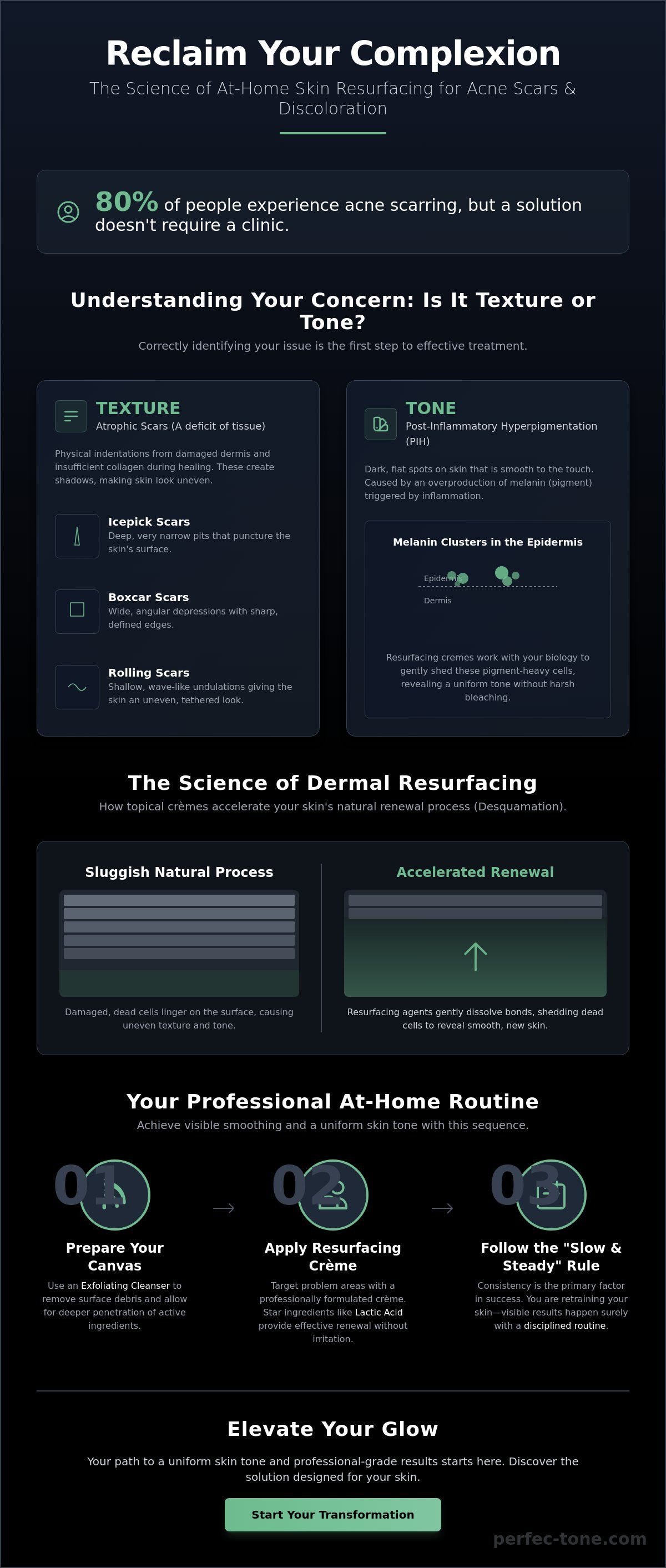
Have you ever looked in the mirror and wondered why your skin feels bumpy even when the breakouts are gone? It's a common frustration that requires a professional perspective to resolve. To fix the problem, you first have to identify it correctly. Many people confuse post-inflammatory hyperpigmentation (PIH) with true atrophic scarring. While they often appear together, they are biological opposites. One is a surplus of pigment; the other is a deficit of tissue. A high-performance resurfacing creme for acne scars must be sophisticated enough to address both cellular turnover and pigment regulation simultaneously. Without this dual-action approach, you're only solving half the puzzle.
Physical indentations are the result of a disrupted healing process. When a blemish becomes severely inflamed, it can damage the underlying dermis. If the body doesn't produce enough collagen to fill the void during the repair phase, an atrophic scar forms. These are typically categorized by their physical shape:
These pits create shadows on the face, which is why your skin looks uneven under overhead lighting. Understanding how acne leads to scarring is vital because it highlights the importance of the dermis. Surface smoothness depends entirely on the structural support underneath. If that support is missing, surface-level treatments alone won't suffice. You need a solution that encourages the skin to rebuild its own refined texture.
If your skin is smooth to the touch but covered in dark, flat spots, your concern is tone. This is known as PIH. When inflammation occurs, it triggers melanocytes, the cells that produce color, to go into overdrive. In deeper skin tones, this often results in stubborn melanin clusters that linger for months or even years. Don't fall for the trap of aggressive "bleaching" creams. These harsh chemicals can cause irreversible damage, such as permanent loss of pigment or "halo" effects around the spots. Using a targeted resurfacing creme for acne scars allows you to address these melanin clusters without the risks associated with traditional bleaching agents. Instead of forcing a change, professional-grade formulas work with your biology to shed pigment-heavy cells and reveal the uniform skin tone beneath.
How does a topical formula actually change the physical landscape of your skin? It's not magic; it's a precisely calibrated biological intervention. To understand how a professional resurfacing creme for acne scars works, we must look at desquamation. This is the natural process where your skin sheds dead, damaged cells to make room for new ones. When you have acne scars, this process is often sluggish or uneven. Topical resurfacing agents act as a catalyst, accelerating this renewal to reveal the healthier tissue hidden beneath the surface.
Unlike aggressive mechanical scrubs that can cause micro-tears and worsen inflammation, chemical resurfacing is uniform and controlled. It works at a microscopic level to refine the skin without the trauma of physical abrasion. While professional treatments for acne scars like laser therapy or chemical peels provide intensive results, a high-quality crème offers a sustained, daily approach to dermal renewal. This gradual process is often safer for a wider range of skin tones, as it avoids the sudden heat or trauma that can trigger hyperpigmentation.
The efficacy of these treatments depends heavily on pH levels. If a product's pH is too high, the active ingredients won't penetrate the skin's barrier. If it's too low, you risk severe irritation. Professional formulas balance this acidity to ensure maximum results with minimal downtime. However, even the most advanced formula requires your commitment. Consistency is the primary factor in success. You're training your skin to behave differently, and that training takes time. Results don't happen overnight, but they do happen surely with a disciplined routine.
Resurfacing agents work by dissolving the protein bonds, or "glue," that hold dead skin cells to the surface. By removing this top layer, a signal is sent to the deeper layers of the epidermis to accelerate the production of fresh, healthy cells. On average, the human skin undergoes a complete cycle of cellular turnover every 28 days, though this pace often slows as we age or deal with chronic inflammation. By maintaining this cycle through a targeted routine, you ensure that damaged tissue is constantly being replaced by new, smoother skin.
A smooth surface does more than just feel better; it reflects light more effectively, creating that sought-after "glow." Certain resurfacing crèmes also encourage the skin to appear firmer and more resilient by supporting the dermal matrix. This firming effect helps minimize the appearance of atrophic shadows. To achieve this without irritation, hydration is non-negotiable. You must replenish the moisture barrier while you resurface to prevent the dryness that can lead to redness. For those ready to begin this transformation, choosing a specialized resurfacing crème is the definitive first step toward a refined complexion.
Which active ingredient truly serves your skin's unique needs? When selecting a professional resurfacing creme for acne scars, you'll likely encounter three main contenders: Retinoids, Salicylic Acid, and Lactic Acid. While each has its merits, they aren't created equal for every skin type. Retinoids are powerful for turnover, but they often come with a period of intense peeling. In fact, new 2026 regulations in the UK and EU have capped retinol concentrations in facial products at 0.3% due to its high potency and potential for irritation. Salicylic acid excels at clearing pores, yet it can leave the skin feeling stripped and parched. Lactic acid emerges as the "gentle giant" of the group. It provides the necessary exfoliation to smooth physical scars while simultaneously acting as a humectant to draw moisture into the skin.
For those with melanin-rich skin, the choice of active ingredient is a high-stakes decision. Aggressive resurfacing can trigger defensive melanin production, leading to new dark spots even as you try to heal old ones. Lactic acid minimizes this risk. It offers a dual-action benefit that most other acids lack: it dissolves the bonds of dead skin cells while increasing the skin's natural moisture levels. This prevents the dreaded "purge" often associated with harsher treatments. By choosing a balanced resurfacing creme for acne scars, you're opting for a transformation that respects your skin's barrier rather than attacking it.
Why does molecule size matter in your skincare routine? Glycolic acid is the smallest Alpha Hydroxy Acid (AHA), which allows it to penetrate the skin rapidly. This quick entry often causes stinging, redness, and a higher risk of post-inflammatory hyperpigmentation. Lactic acid has a larger molecular structure. It penetrates more slowly and evenly, providing a controlled resurfacing effect that is far safer for sensitive or deeper skin tones. You can explore the full benefits of this approach in our Lactic Acid Treatment: The Expert Guide to Radiant, Melanin-Rich Skin.
Resurfacing without moisture is a recipe for a compromised skin barrier. When you remove the outer layer of dead cells, the fresh skin underneath is vulnerable. A well-balanced formula includes ingredients that soothe and hydrate while the acid works its magic. Look for crèmes that pair lactic acid with soothing botanical extracts or moisture-locking lipids. This synergy ensures that your skin remains resilient, healthy, and glowing throughout the renewal process. True professional-grade results come from this balance of power and protection.
A professional result requires more than a single product; it demands a methodical regimen. You've already learned how lactic acid serves as a "gentle giant," but even the best active ingredient fails without a proper delivery system. Preparing the canvas is your essential first step. By using an exfoliating cleanser, you remove surface debris that would otherwise block your treatment. This ensures your resurfacing creme for acne scars reaches the dermal layers where it can trigger actual change. Without this preparation, you're simply applying product to dead tissue.
Don't rush the process. We advocate for the "Slow and Steady" rule. Unlike some brands that suggest daily use from day one, we recommend a gradual introduction. This allows your skin to build tolerance without compromising the barrier. If you have sensitive skin, consider "sandwiching" your treatment between layers of moisturizer to buffer the active ingredients. Sun protection is a non-negotiable part of this journey. Resurfacing makes your skin more susceptible to UV damage. Without daily SPF, you risk darkening the very spots you're trying to fade.
What does progress look like? During week 2, you may notice a slight glow as dead cells begin to shed. By week 4, surface texture typically begins to feel smoother to the touch. Week 8 is where high-stakes transformation happens. Pigment clusters start to break up, and atrophic shadows appear less pronounced. Consistency during these two months is what separates a temporary fix from a permanent improvement.
Follow this curated sequence for optimal results:
Expertise means knowing when to pause. If you notice persistent redness, an unusual "plastic" shine, or stinging that lasts longer than a few seconds, you may be over-exfoliating. Professional-grade routines always include rest nights. These are evenings dedicated solely to hydration and recovery. Additionally, never mix multiple potent acids in the same session. This creates a volatile environment that can lead to irritation rather than renewal. Focus on one high-performance solution at a time for the best results.
Ready to master your skin's renewal? Shop our Resurfacing Crème and begin your transformation today.
Why settle for generic solutions when you can access specialized expertise designed for your unique skin needs? At Perfec-Tone, our legacy is rooted in decades of clinical experience, specifically focused on the complexities of skin of color. We've spent years refining the science of dermal renewal to ensure that every individual can achieve high-stakes transformation without the need for clinical procedures. Our community relies on us not just as a vendor, but as a trusted mentor and a long-awaited solution to persistent frustrations. When you choose our resurfacing creme for acne scars, you're investing in a proven system designed by experts who advocate for your skin's health and integrity.
We don't believe in the vague, airy promises common in the beauty industry. Instead, we offer a results-oriented and empowering approach. We've seen firsthand how the right routine can change a life by restoring confidence and clarity. Our formulas are scientifically grounded and deeply personal, emphasizing a customized experience rather than a one-size-fits-all model. It's time to move beyond the fear of damaging your skin and step into a regimen that validates your needs and delivers tangible outcomes.
What makes our formulation the definitive choice for your at-home routine? It's the balance of potency and safety. We've carefully curated ingredients that provide skin resurfacing products without procedures, allowing you to master your skin's renewal on your own terms. Our resurfacing creme for acne scars targets the biological root of texture issues by accelerating cellular turnover without the harshness of traditional acids. This approach ensures that your skin stays healthy and resilient while it sheds damaged tissue. We're proud to offer a product that reflects our pioneering spirit and commitment to longevity.
True professional-grade results often come from the synergy of a complete system. While the Resurfacing Crème focuses on smoothing physical indentations, pairing it with our Clarifying Gel can significantly speed up the fading of stubborn dark spots. This combination ensures that both texture and tone are addressed with clinical precision. To maintain your newly polished finish, our Refining Crème plays a vital role in keeping the skin hydrated and protected. This methodical, step-by-step regimen mirrors a high-end professional consultation, guiding you from initial frustration to a confident, glowing reality. Take the next step toward the skin you deserve today.
You now possess the professional blueprint to transform your complexion from the comfort of home. We've established that identifying your specific skin concerns, whether atrophic texture or stubborn pigment, is the critical first step toward a successful recovery. By integrating a high-performance resurfacing creme for acne scars that utilizes the hydrating power of lactic acid, you're choosing a strategy that respects your skin's biology while delivering visible change.
High-stakes transformation is a journey of consistency. Since 1980, we've spent more than 40 years refining specialized formulas for melanin-rich skin, ensuring you can achieve professional-grade results without the cost or downtime of clinical procedures. Your commitment to a methodical nighttime routine and daily sun protection is what will finally bridge the gap between persistent frustration and a polished, uniform finish.
Discover the Perfec-Tone Resurfacing Crème for a Flawless Complexion
The skin you've always deserved isn't a vague promise; it's a tangible outcome of expert-led care. Trust the science and stay the course. We're here to support you every step of the way.
Visible changes typically manifest between 4 and 8 weeks of consistent application. While a surface glow often appears within the first 14 days, the deeper restructuring of atrophic tissue requires at least two full cellular turnover cycles. Your skin needs this time to shed damaged layers and build a smoother surface. Patience is a non-negotiable requirement for high-stakes transformation.
Topical formulas significantly improve the appearance of pitted scars by smoothing sharp edges and encouraging dermal renewal. While deep atrophic scars may not disappear entirely without clinical intervention, a professional routine softens their depth and makes them much less noticeable under light. Consistency helps fill in the shadows created by indentations, leading to a more uniform and refined skin texture over time.
Using a professional resurfacing creme for acne scars is safe for dark skin tones when the formula prioritizes gentle acids like lactic acid. Deeper complexions are more susceptible to post-inflammatory hyperpigmentation if a product is too aggressive. We advocate for formulas that balance exfoliation with deep hydration. This ensures you achieve clarity without triggering defensive melanin clusters or causing irritation that leads to new marks.
Don't start with nightly application; begin with two or three nights per week to build tolerance. This "Slow and Steady" rule prevents barrier compromise while your skin adjusts to the active ingredients. As your skin becomes more resilient, you can gradually increase frequency. Always monitor for signs of sensitivity and remember that rest nights are essential for the skin's natural recovery and repair process.
The primary differences are concentration and downtime. A chemical peel is a high-intensity, intermittent treatment that often causes visible peeling and requires significant recovery time. A resurfacing crème is a controlled, professional-grade solution designed for gradual daily or semi-daily use. It provides the same renewal benefits as a peel but through a safer, more manageable process that fits into a standard at-home routine.
You can use these treatments during active breakouts, provided you avoid applying them to open wounds or raw skin. Resurfacing agents actually help prevent future acne by keeping pores clear of the dead cell buildup that causes clogs. If your acne is severely inflamed, we recommend focusing on calming the skin first. Once the inflammation subsides, the crème becomes your primary tool for erasing the marks left behind.
While a consultation is always beneficial for diagnosing specific scar types, it isn't mandatory for using at-home professional-grade products. Modern regulations like MoCRA ensure that reputable brands maintain high safety and reporting standards for their formulations. Look for transparent companies that provide clear guidance on usage. If you have a history of extreme skin sensitivity or underlying medical conditions, professional advice is a wise precaution.
You may experience mild, microscopic flaking as old cells shed, but significant peeling shouldn't occur with a well-balanced resurfacing creme for acne scars. If you see sheets of skin or feel intense stinging, you've likely over-exfoliated and compromised your barrier. Pause use for a few nights and focus on hydration. True resurfacing is a strategic, gradual renewal process rather than an immediate, harsh stripping of the surface.
Featured Product

Why You'll Love It You want your dark marks gone, but your skin does not tolerate harsh treatments. The s...
Clear skin and even skin tone, not adapted from generic formulas — built specifically for dark spots, hyperpigmentation, and acne.
